
A dual licence store serves two customers out of one building. Often the same shelves, the same staff, the same front door. From the inside it feels like one business with two tills.
From the outside, in search, it is two entirely different markets. Different words, different urgency, different research depth, and a buying process that on one side takes an afternoon and on the other can take two months.
Almost every dispensary site treats medical as a subset of adult use. A tab on the menu, a line on the homepage, a sentence on the location page. That is the single most common structural mistake in dispensary organic search, and it costs the medical side almost entirely.
Read this before the rest of the module. This is a guide to search behaviour and compliance, not a guide to cannabis as medicine. Nothing here is medical or legal advice.
It does not say what any product does for any condition. That question belongs to clinicians and regulators rather than to a marketing page, and section ten is about why publishing an answer to it is the fastest way to end a dispensary’s online presence.
State rules on medical programmes vary and change constantly. Every state-specific point here is described as a category of rule you have to look up, never as a fact about your state. Confirm anything that touches your licence with your regulator or your counsel.
One storefront, two customers who search nothing alike
The adult use customer is shopping. They know what the product is, they usually know what they want, and the decision they are making is where to buy it. Proximity, price, stock, hours.
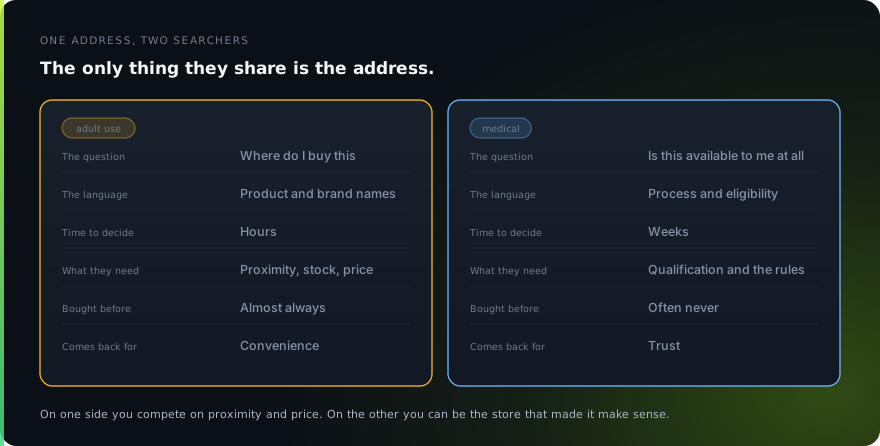
The medical customer is frequently at an earlier question entirely. Not which store, but whether any of this is available to them, what it takes to qualify, and what happens between wanting it and being allowed to buy it.
A large share of them have never bought cannabis legally before. They do not know the vocabulary, they do not know the categories, and they are frequently being pointed at this by somebody else rather than arriving on their own.
That produces a searcher who reads. Adult use traffic bounces through a menu in ninety seconds. Medical traffic reads a page end to end, comes back three times over two weeks, and remembers which site actually explained the process.
Which is the part worth holding on to. On the adult use side you compete on proximity and price, and you are largely interchangeable. On the medical side you can be the store that made it make sense, and that is a different kind of loyalty.
What the two query sets actually look like
Pull a keyword export for any dual licence market and the two sets barely overlap. Not different phrasings of the same thing. Different questions.
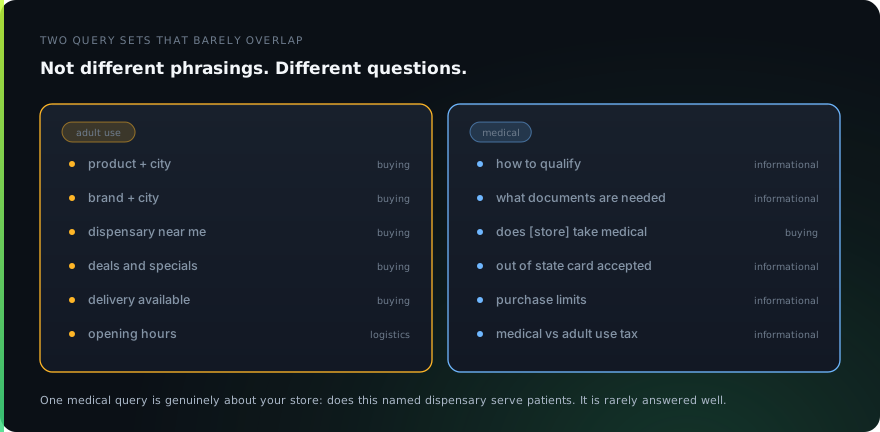
Adult use queries are dominated by product and place. A product name with a city attached, a brand with a city attached, the near me searches, deals, delivery, hours. Almost all of it is transactional and almost all of it is close to a purchase.
Medical queries are dominated by process and eligibility. How to qualify. What documents are needed. Whether a specific store serves patients. What an out of state card does. How purchase limits differ. What the tax difference is.
The structural difference matters more than the vocabulary. Most medical queries are informational, and the informational ones come first in the sequence rather than last. Somebody asks how to qualify weeks before they ask where to buy.
One group in the medical column is worth separating from the rest, because it is the only medical query that is genuinely about your store. Somebody asking whether a named dispensary serves patients has already chosen where they want to go and is checking whether they can.
That query has near total buying intent and is almost never answered on the page it lands on. The visitor arrives on a location page that mentions medical once, cannot tell whether it means today, and goes to check a directory instead.
The out of state and reciprocity group is the other underserved one. Whether a card from elsewhere is recognised, what it permits, and what it does not, is a question with a definite answer that changes by state and that almost no store publishes.
There is one more asymmetry that decides how you resource this. The adult use set is enormous, competitive, and mostly won on proximity. The medical set is smaller, far less competitive, and won on whoever bothered to answer properly.
The funnel is a different shape on the medical side
The reason medical content keeps getting cut from budgets is that it is measured against the wrong funnel.
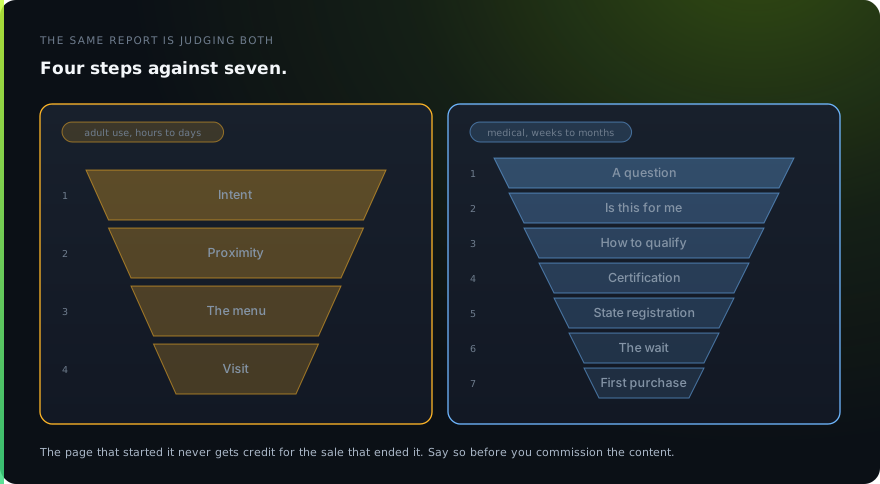
Adult use runs intent, proximity, menu, visit. Hours or days, and the search that started it is usually the search that ended it. Attribution is straightforward because the whole thing happens inside one session or two.
Medical runs an initial question, a check on whether it is even available to them, qualification research, an appointment, state registration, a wait, and then a first purchase. Weeks at best. In slower programmes, months.
Which means the page that started it will never be credited with the sale that ended it. Six weeks and three devices later, no analytics tool joins those two events, and no reasonable configuration of one would.
So on a dashboard, the qualification content looks like traffic that does not convert, and it gets cut in the second or third quarter of every programme I have seen run without this being explained up front.
Say it before you build it. This content reaches somebody weeks before a competitor gets the chance, it will never show a clean conversion path, and if the only test it has to pass is last-click attribution then do not commission it at all.
Where the qualification cluster fits, and where it does not
In most medical markets the highest volume query by a wide margin is some version of how to get a card in that state. It is also, awkwardly, not a query about your store at all.
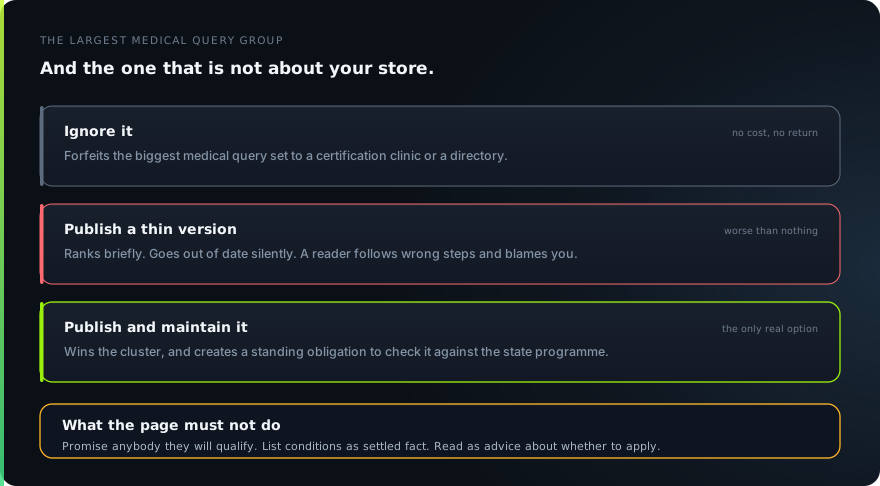
Three things happen in practice. Most stores ignore it, which forfeits the largest group of medical searchers in the market to a certification clinic or a directory.
Some publish a thin version, which ranks for a while, then goes out of date the next time the state changes a form or a fee. Nobody notices, because a page does not announce that it has become wrong.
That is the option to avoid. A patient who follows your steps and turns up at an appointment without the right document does not conclude that the state changed the rules. They conclude that your store does not know what it is talking about.
The third option is to publish the maintained version and accept the obligation that comes with it. Somebody owns that page, checks it against the state programme on a schedule, and updates it the week a change lands.
What the page should do is describe a state process and point at the state’s own source for every step. What it must not do is promise anybody they will qualify, list conditions as though the list were settled and universal, or read as advice about whether somebody should apply.
That constraint is not a limitation on the page. Describing a process accurately, with the official source next to every step, is a better page than the hedged version that tries to be encouraging, and it is the one that survives a rule change with a small edit rather than a rewrite.
One site, two audiences: four architectures
Once you accept that these are two markets, the question becomes where the second one lives. There are four answers and only two of them are good.
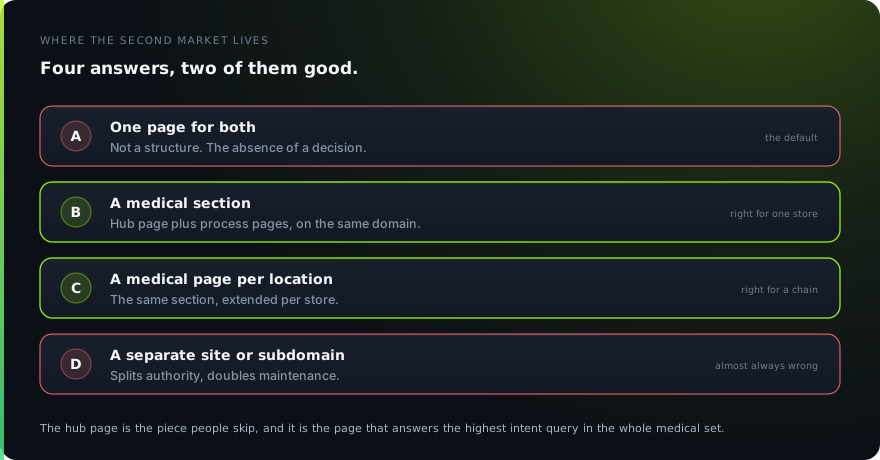
- One page for both. The default, and the subject of the next section. It is not a structure so much as the absence of a decision.
- A medical section. A hub page that owns the medical topic, with process pages under it: qualification, first visit, limits and rules, reciprocity, renewals. This is the right answer for a single store.
- A medical page per location. The same section, extended so each store has its own medical page, because purchase rules, hours and patient services genuinely differ by site. Right for a chain, and section seven is about doing it without cannibalising yourself.
- A separate site or subdomain. Splits your authority across two properties, doubles the maintenance, and gives the smaller of the two markets the weaker domain. There are licensing situations that force it. Outside those, it is a mistake that takes two years to undo.
The hub page is the piece everybody skips
Without it the process pages have no parent, they compete with each other for the general medical queries, and there is no single URL to link to when somebody asks whether the store serves patients.
What it needs to carry is short. What the store does for patients today, in the first two sentences and not below a scroll. Then the process pages, linked and described rather than listed as bare titles.
It is also the page that answers the brand plus medical query from the previous section, which is the highest intent query in the whole medical set. If that answer is a sentence buried on a location page, the hub is doing nothing.
The page that tries to be both, and why it ranks for neither
The most common medical page on a dispensary site is a location page with a paragraph added. One heading covering both, copy hedged so it fits either reader, and a title tag that names both.
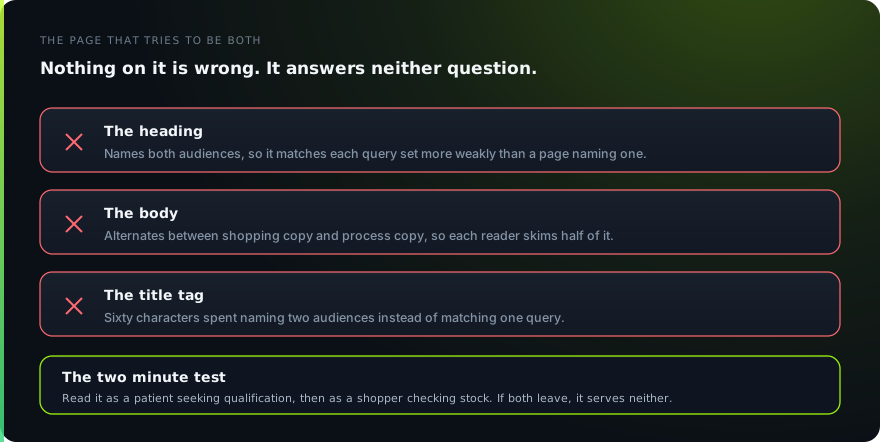
The relevance problem is mechanical. A page that names two things matches each of them more weakly than a page that names one, and in a market where the adult use query set is already brutally competitive, weakly is not enough.
The reader problem is worse and simpler. A patient scanning for what they need to bring to a first visit is reading past product copy. A shopper checking stock is reading past registration steps. Both of them are skimming half a page.
The title tag shows it most clearly. You have around sixty characters and the combined page spends them naming two audiences instead of matching one query, so it competes badly for both.
There is a two minute test for any page you suspect of this. Read it as a patient looking for the qualification process. Then read it as a shopper checking whether a product is in stock. If both readers leave without an answer, the page is not serving either.
Medical and adult use pages competing with each other
Splitting the page solves one problem and creates another, and the second one is easier to miss because everything looks fine on the surface.
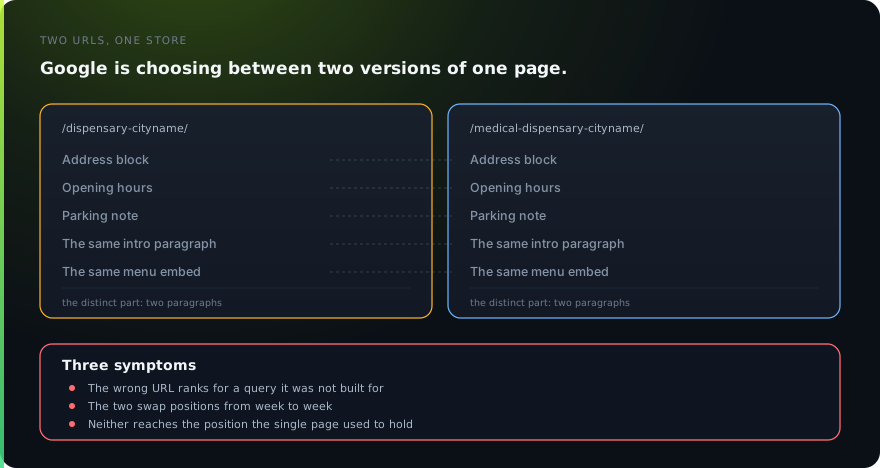
The pattern is a medical URL and an adult use URL for the same store, built from the same template, sharing the address block, the hours, the parking note, the intro paragraph and the menu embed. The genuinely different part is two paragraphs.
Three symptoms give it away. The wrong URL ranks for a query it was not built for. The two swap positions from week to week. Or neither reaches the position the single combined page used to hold, which is the version that gets a split reversed by an owner.
This is the same failure module 03 covers between two stores, arriving here between two pages of one store. It is also the same problem two separate locations run into, with the same diagnosis and the same fix.
Confirming it takes a few minutes rather than a debate, and it is worth doing before anybody rewrites anything. Checking which of the two pages Google actually picked for each term turns an argument about page structure into a list of specific queries.
The rule that prevents it is not a word count. The medical page has to answer questions the adult use page does not answer at all. Qualification, limits, documents, reciprocity, what happens on a first visit.
If the medical page is the adult use page with patients swapped in for customers, you have not built a second page. You have built a duplicate with a different heading, and you have handed Google a decision it did not need to make.
The Business Profile question: one listing or two
This comes up on every dual licence account and the wrong answer is expensive, so it is worth being precise about what Google’s guidelines actually say rather than what people assume.
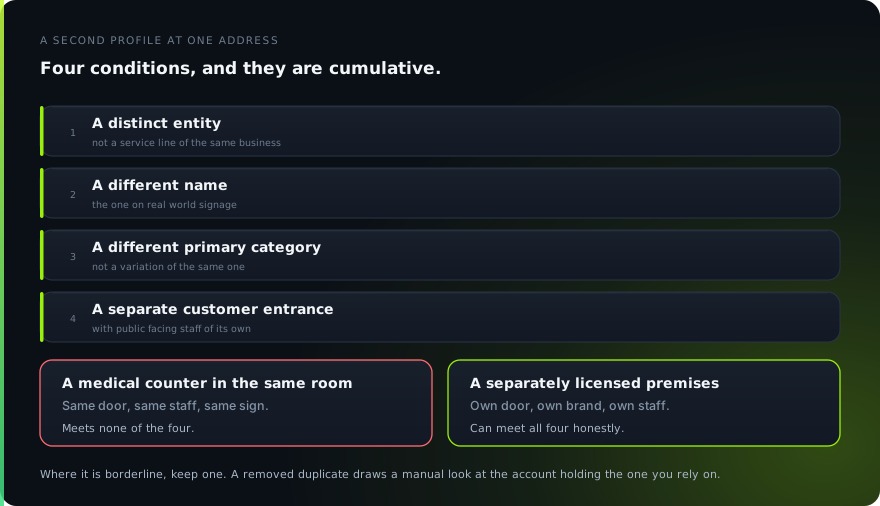
The baseline rule is one profile per location. The exception Google describes is a department that operates as a distinct entity: a different name in the real world, a different primary category, a separate customer entrance, and staff the public deals with directly.
Those conditions stack. A medical counter at the back of the same room, staffed by the same people, behind the same sign, is not a distinct entity in any of the four senses, and a second profile for it is a listing Google’s own guidelines say should not exist.
Some states do force genuinely separate premises, with separate licences, separate entrances and separate branding. That situation can meet the test honestly, and where it does, two profiles are correct rather than risky.
The reason to be careful is that cannabis profiles are reviewed with less patience than other categories. Module 02 covers what recovery looks like, and a profile that gets pulled without warning is the outcome you are trying not to invite.
Before creating anything, it is worth knowing what on the existing profile is already likely to trip a review, because a second listing raises attention on the first one rather than sitting quietly beside it.
Where it is genuinely borderline, keep one profile. A duplicate that gets removed is not a neutral event. It draws a manual look at the account that owns it, and the profile you actually depend on is in that account.
Categories, and the words you are allowed to use
Whether you run one profile or two, the primary category is the largest single relevance lever on it, and the medical question shows up there before it shows up anywhere else.
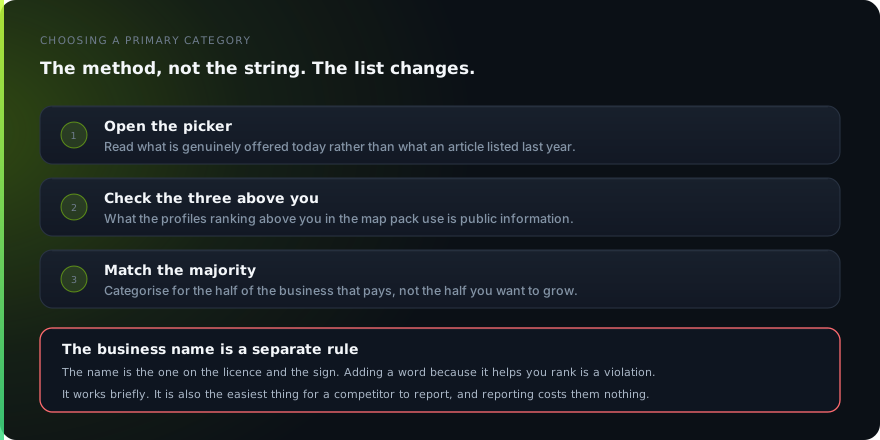
No category string is named here on purpose. The available options change, and a guide that publishes one becomes wrong quietly, which is the failure mode this whole set is built to avoid.
The method survives instead. Open the picker and read what is genuinely offered today. Check what the three profiles ranking above you in the map pack are actually using, which is public. Then match the category to the majority of your business rather than to the half you want to grow.
That last point is where dual licence stores go wrong. A store doing most of its volume in adult use, categorised as though it were primarily a medical operation, competes weakly in the market that pays for it. Secondary categories exist for the other half.
The business name is a separate trap and a harder rule. The name is what appears on the licence and on the sign outside. Adding a descriptive word to it because the word helps you rank is a name violation, and it stays one however common it is in your market.
It works, briefly, which is why people keep doing it. It is also the single easiest thing for a competitor to report, and the report costs them nothing and takes ninety seconds.
The medical claim, which is the one that actually ends things
Everything above is a ranking problem. This section is not. This is the part of running a medical programme online where the downside is not a lost position.
The federal position does not vary by state and does not care what your state programme is called. Any product intended for a therapeutic or medical use is treated as a drug, and a product marketed as treating, preventing, diagnosing or curing a disease is an unapproved new drug.
The Food and Drug Administration has issued warning letters over precisely this for cannabis-derived products, and maintains a public list of them. One cannabis-derived prescription drug has federal approval. Nothing on your shelves is it.
So a state medical programme makes the sale legal in that state. It does not authorise a health claim on your website, and the two things get conflated constantly because the programme has the word medical in its name.
That is the actual mechanism behind most of these mistakes. A budtender who is genuinely trying to help writes a product description the way they would explain it at the counter, and the site now carries a disease claim that nobody made a decision to publish.
- Product and strain descriptions. The most common location by a wide margin, and usually written by whoever knows the products best rather than by whoever knows the rules.
- Customer reviews and quotes you have republished. A claim you quoted is still a claim you published. Module 04 covers the testimonial problem in full.
- FAQ answers. Particularly the ones written to capture a question people actually search, which is exactly why they attract the phrasing.
- Title tags and meta descriptions. Short, keyword-driven, written last, reviewed least. A title tag is where this goes wrong most often.
- The Business Profile description and posts. Outside the website, so outside whatever review process the website has.
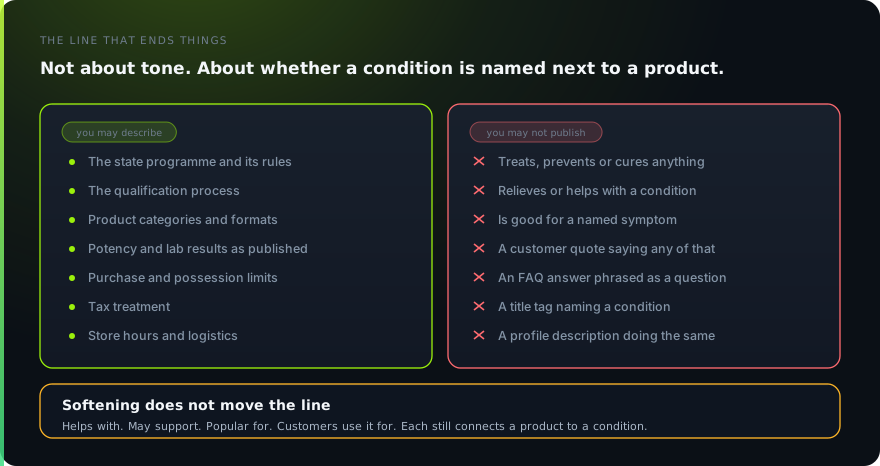
The working rule is short enough to give to a writer with no training. Do not put a condition name next to a product. Not as a benefit, not as a category, not in a question, not in a quote, not softened.
Softening is the trap that catches careful people. Helps with, may support, is popular for, customers use it for. Every one of those still connects a product to a condition, and the hedge is not the part that matters.
At any volume this needs to be mechanical rather than judged. Running the copy through a pass for the phrasing that gets pages pulled before it publishes catches the ordinary cases, and a human reviews what it flags rather than reading everything.
Patient-facing content that is not medical advice
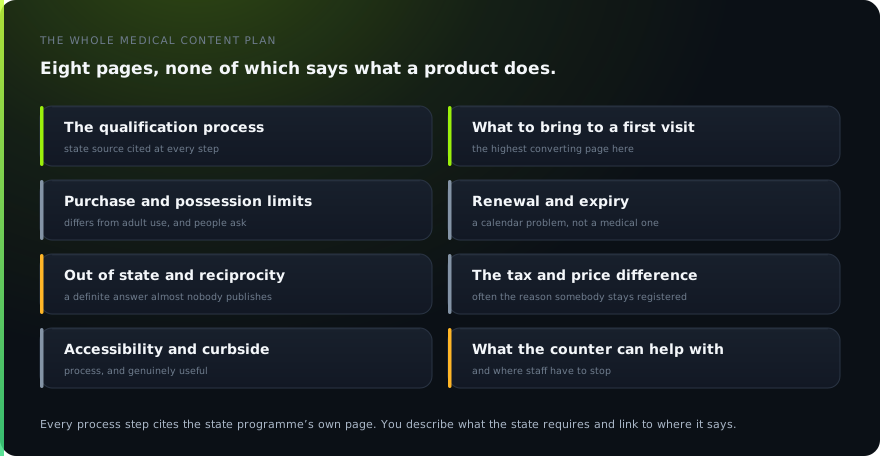
What is left after that section is far more than people expect, and it is also the content that actually wins the medical query set, because almost none of it is about the products.
The page nobody builds, which converts best
The highest converting page on this list is the one almost no store builds: what actually happens on a first visit. Where to park, which door, what identification is checked, how long it takes, what the counter can and cannot advise on.
It converts because it removes the specific anxiety keeping somebody from walking in, and nobody in the market has written it. It is also entirely process information, so there is nothing in it for a compliance review to argue with.
The sourcing discipline is what keeps the rest safe. Every process step points at the state programme’s own page. You are describing what the state requires and linking to where it says so, rather than restating it as your own claim about what somebody needs.
Get the counter questions from the counter. Ask staff which questions they answer twenty times a week, then write the process half of each answer and stop where the advice half would start. Module 03’s intake is the same method applied to a different subject.
One more reason to write these properly. A patient asking a process question will increasingly get it answered by an assistant that never shows them a website, and a page that states the answer plainly in one place is the one that gets used.
Checking whether a patient question can actually be answered from your page is worth doing on this content specifically, because process answers are the kind an assistant will lift cleanly and product copy is not.
What happens when the state goes adult use
If you work on medical accounts long enough you will be in a market the year it opens to adult use, and the medical side of the site will need a decision rather than neglect.
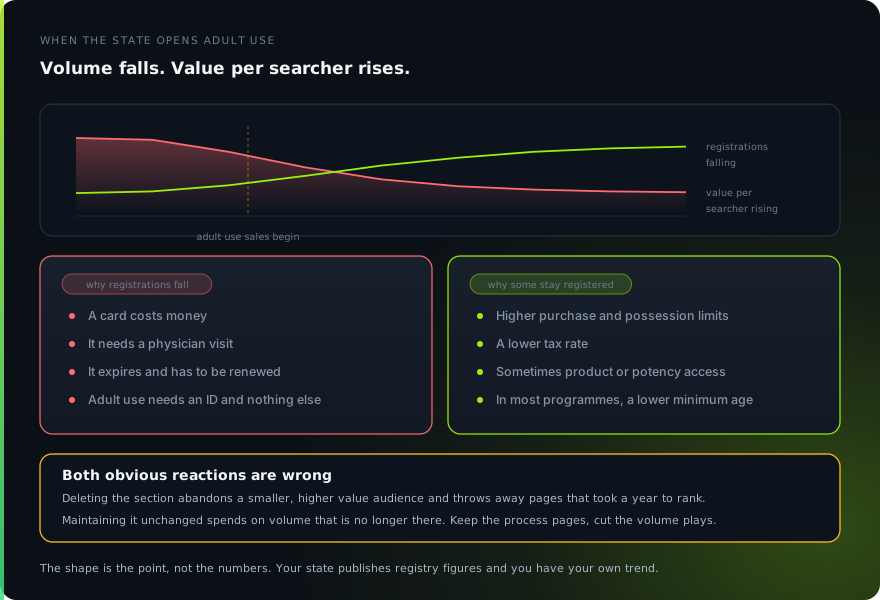
State registries have shown steep enrolment declines after adult use sales begin, and the reasons are not mysterious. A card costs money, needs a physician visit, and expires. Adult use needs an identification document and nothing else.
Some patients stay registered, and it is worth knowing why, because it tells you what the remaining content has to address. Higher purchase and possession limits, a lower tax rate, sometimes access to products or potencies adult use does not get, and in most programmes a lower minimum age.
The search consequence is two things at once. Medical query volume falls, sometimes sharply, while the people still searching those terms are further along and worth more per visit than they were before.
Both obvious reactions are wrong. Deleting the medical section abandons a smaller but higher value audience and throws away pages that took a year to rank. Maintaining it as though nothing happened keeps spending on volume that is no longer there.
The correct version is unglamorous. Keep the process content and the pages that explain what registration still gets you. Cut the volume plays. Rewrite the qualification page so it leads with why somebody would still bother, which is now the actual question.
Do not take a number from an article for this, including this one. Your state publishes its own registry figures, your own Search Console holds your own query trend, and the two of those tell you what happened in your market rather than in somebody else’s.
Measuring two markets in one property
The last problem is that Search Console does not know you run two businesses, so by default both markets arrive as one line and neither can be managed.
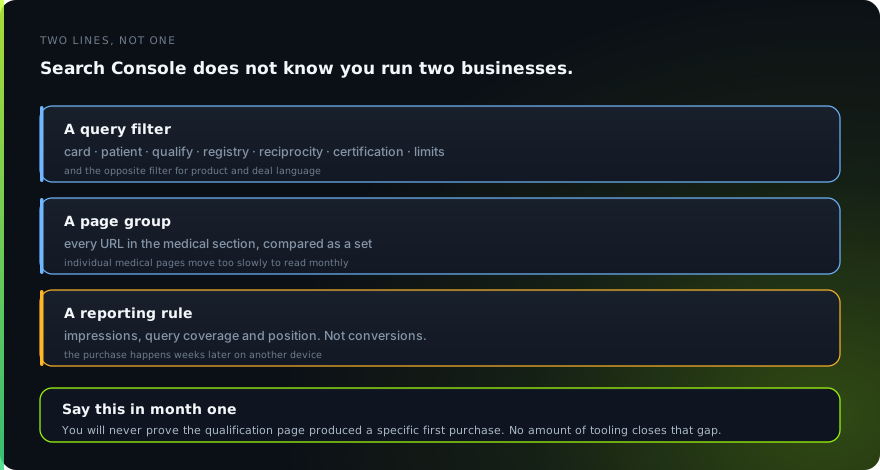
Separating them is straightforward and almost nobody does it. Build a query filter for the medical vocabulary: card, patient, qualify, registry, reciprocity, certification, limits. Build the opposite filter for product and deal language. Track them as two lines from the first month.
Do the same by page. Group the medical section URLs and compare the group against the adult use pages rather than reading individual rows, because individual medical pages move slowly enough that a monthly view of one page tells you nothing.
Then agree the reporting rule before anybody asks for it. The medical line is reported on impressions, query coverage and position for the qualification cluster. Not on conversions, because the purchase happens weeks later on a different device.
Say the uncomfortable part in the first month rather than the fourth. You will never be able to prove that the qualification page produced a specific first purchase. That is a property of the buying process, not a gap in the setup, and no amount of tooling closes it.
What you can show is that the store is present for the questions somebody asks weeks before they can legally buy anything, and that nobody else in the market is. In a category this competitive, that is a defensible position rather than a consolation.
That is the work on both markets. Six modules on the adult use side of the business, one on the part that happens off your own site, and this one on the market that shares your address and shares almost nothing else.
Module 09 is the one that decides whether any of it survives contact with a monthly report. Everything above produces work. That module is about proving which of the work did anything.
If the medical half of the site has been an afterthought and you would rather it was not, the medical marijuana side of the work is set out with the rest, and the free audit reads the site the way each of the two markets would.
Check your own site
Run the free check to see how your menu, age gate, and location pages appear to a search engine.