
Every dispensary SEO project eventually stalls in the same place. The profile is clean, the location pages are genuinely different from each other, the menu is finally readable by a crawler, and the store still sits fourth in the map pack behind somebody with a worse site.
At that point there is usually one thing left that nobody has touched. Google describes local ranking as three things: how relevant you are, how close you are, and how well known you are.
You cannot move the store. Every module before this one was, between them, an extended answer to the relevance half. This module is the third factor, which in practice means links and mentions, and which almost nobody working on a dispensary site does at all.
It is also the part of cannabis dispensary marketing where the most money gets wasted, because the difficulty of the job has created an industry that sells a shortcut. A good part of this module is about why that shortcut is aimed at you specifically.
Nothing here involves buying a link. That is not a moral position. It is that a bought link is a liability you cannot return, sitting on a client’s domain, and the person who sold it to you is not the one who has to explain it later.
Prominence is the third factor, and almost nobody works on it
Google’s own description of how local results are ordered has not changed in years, and it is unusually plain for a Google document. Three inputs: relevance, distance, prominence.
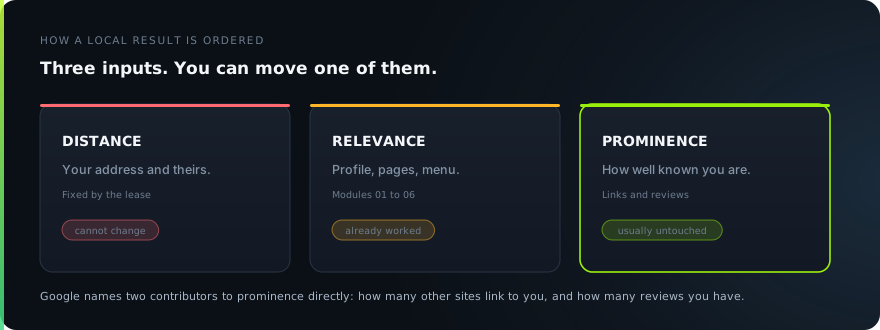
Distance is decided by your address and the searcher’s. Relevance is the work covered by the earlier modules: the categories on the profile, the substance on the location page, whether the menu is in the index at all.
Prominence Google describes as how well known the business is, and it names two contributors directly: how many other websites link to you, and how many reviews you have. That wording matters. Links are not a side channel here. They are named inside the ranking model itself.
Which produces the situation that sends most people to this module. Two dispensaries, comparable distance, comparable profiles, comparable pages. The one the rest of the web has noticed wins, and no amount of further on-site work closes that gap.
It also explains a pattern that confuses owners constantly, which is how much of the map pack proximity has already decided before anything else gets a vote. Prominence is the lever that lets you win a search you are not the closest to. It is the only one.
The reason it goes untouched is not that people think it is unimportant. It is that every other part of this job can be done alone, at a desk, on a site you control. This part requires contacting people outside the company and being told no repeatedly.
Why this job is different when you sell cannabis
Generic link building advice assumes a set of doors that are open to almost every business. For a licensed cannabis retailer, most of them are shut before you knock, and knowing which ones saves you a month.
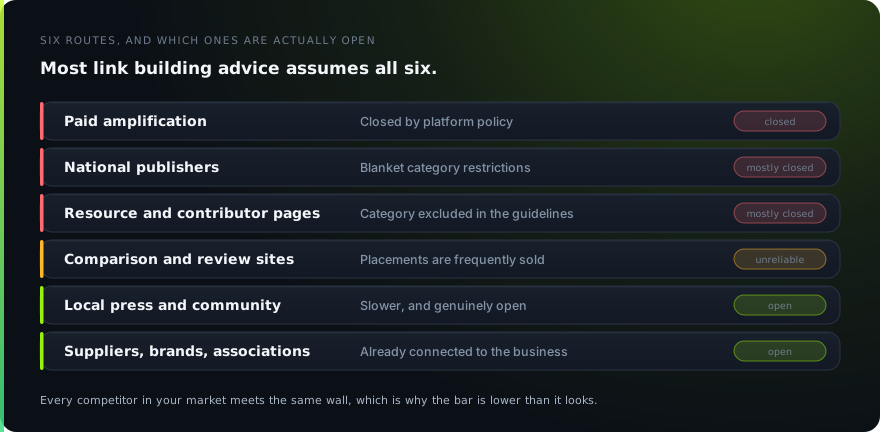
Paid amplification, the normal way a piece of content gets in front of the people who might link to it, is closed to you by platform policy. Module 04 covers why in detail. The practical effect here is that anything you publish has to travel on its own.
Many national publishers carry a blanket restriction on the category that has nothing to do with your particular business and is not negotiable by an outreach email. Generic resource pages and contributor programmes usually carry the same exclusion in their guidelines.
A large share of the comparison and review sites that do cover the industry are selling the placement. That is worth knowing before you spend two weeks trying to earn one editorially, and it is the subject of section eleven.
So the yield on a standard outreach list is a fraction of what the same list would return for a restaurant or a dentist. Anyone quoting you a link volume from a general playbook has not run one of these campaigns.
Here is the compensating advantage, and it is a real one. Every competitor in your market faces exactly the same wall. Pull the referring domains for the four dispensaries above you and the usual finding is that they have their menu platform, two directories, and nothing else.
The bar is not high. It is just that the routes over it are unglamorous and slow, which is a different problem from being difficult.
What Google counts as a link, and what it tells you to qualify
Before any tactic, the rule everything else has to pass. Google’s spam policies define link spam as creating links to or from a site primarily to manipulate rankings, and then list what that covers.
The listed examples include buying or selling links for ranking purposes, exchanging money, goods or services for links, excessive link exchanges, using automated services to create links, requiring a link as part of a contract or terms of service, and low quality directory or bookmark links.
Two more on that list are worth reading twice if you run a multi-store site: widely distributed links in the footers or templates of various sites, and forum comments carrying optimised links in the post or the signature.
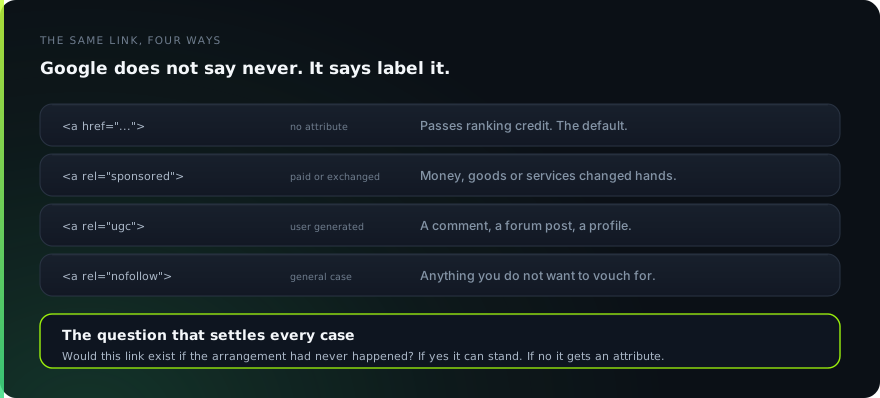
What Google says to do about arranged links is not “never take one”. It is to qualify them with an attribute.
A link that was paid for or exchanged carries a sponsored value. A link somebody’s user left carries a user generated value. Nofollow remains the general case for anything you do not want to vouch for.
Both halves of this are true at once, and most people only ever hear one of them. A sponsorship link marked as sponsored is not a policy violation. A sponsorship link marked as sponsored is also not going to move your prominence. Whoever tells you only the first half is selling something.
The working rule that survives every edge case: if the link would exist had the arrangement never happened, it can stand unqualified. If it exists because of the arrangement, it gets an attribute. Write that on the brief and you will never have to litigate a specific tactic again.
The five sources that actually work for a dispensary
Everything that reliably works in this industry falls into five groups. They differ enormously in how fast they return anything and in how long what they return survives.
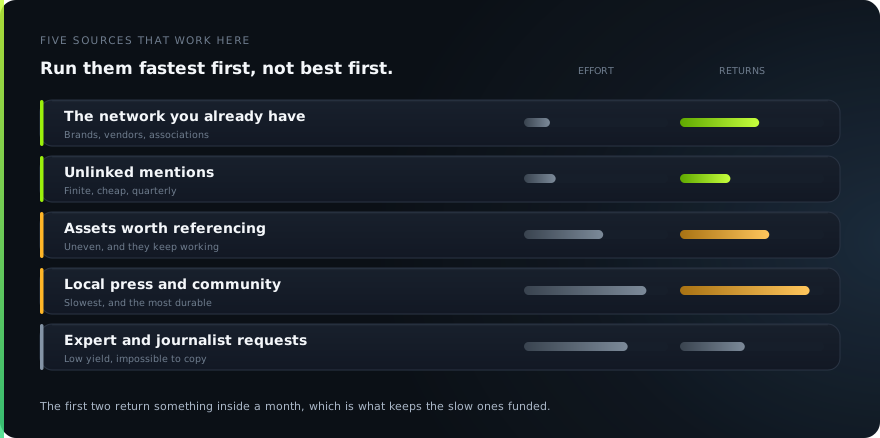
- The network the business already has. Brands it stocks, cultivators, distributors, its vendors, its trade association. These links already have a place to sit and the ask is not a favour. Fastest return of anything in this list.
- Unlinked mentions. Places that already name the business without linking it. Cheap, finite, and worth running once a quarter rather than continuously.
- Assets other people need to reference. A tool, a compiled document, an original count. Uneven returns, and the only source here that keeps working after you stop.
- Local press and community organisations. Slow, relationship-driven, and the most durable links a local business can hold. Also the ones most affected by category restrictions, which section five deals with.
- Expert and journalist requests. The lowest yield per attempt on this list and the highest per link that lands, because a competitor cannot replicate a quote from your general manager.
If you are starting from nothing, run them in that order rather than in order of appeal. The first two produce something inside a month, which is what keeps a programme funded long enough for the slow ones to arrive.
Local sponsorship, done so it survives a look
Sponsorship is the first thing every agency suggests and the first thing that goes wrong. The ordinary version is a few hundred dollars to a local organisation in exchange for a logo and a link on a sponsors page. Read section three again and you will see the problem.
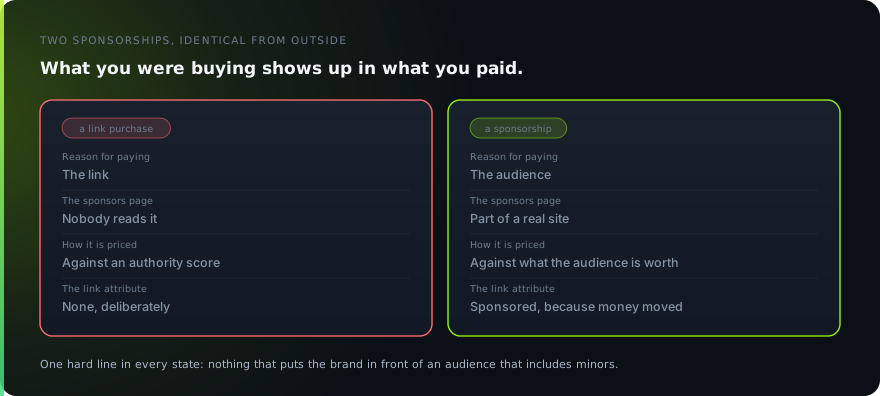
Money changed hands and a link appeared. That is the buying links example almost word for word, and the fix is not to hide it. The fix is to be honest about which of two things you are doing.
If you are sponsoring because the organisation reaches people who shop with you, that is marketing, it is worth doing, and the link should carry a sponsored attribute. You lose nothing you were actually going to get, because a sponsors page with four visitors a month was never going to move prominence anyway.
If the link is the reason for the payment, you are buying a link with extra steps, and pricing gives it away every time. A sponsorship priced against what the audience is worth is a sponsorship. One priced against a third party authority metric is a link purchase with a receipt.
Now the part that is specific to this industry, and it is not a small part. Plenty of organisations cannot accept cannabis money at all, whatever their own views, because of their own funding, their venue or their insurance. Expect that answer and do not take it personally.
In some states the sponsorship itself is treated as advertising, which puts it under the rules covered in module 04 rather than under a marketing budget line. Before committing to anything, check what your own state treats as advertising and confirm it with your regulator or counsel, because these rules differ by state and they change.
One hard line regardless of state. Nothing that puts the brand in front of an audience that includes minors. Youth sport, school programmes, family festivals. Several states prohibit it outright, and in the states that do not, it is still the single fastest way to hand a regulator or a journalist a story about you.
What is left after those filters is narrower than the pitch deck suggests, and it is real: adult community events, industry organisations, causes with an adult audience, local venues. Fewer opportunities, each of which survives being looked at.
Directories: two jobs, one listing
Directory listings do two entirely separate jobs for a dispensary, and confusing them is why people either overvalue them wildly or dismiss them completely.
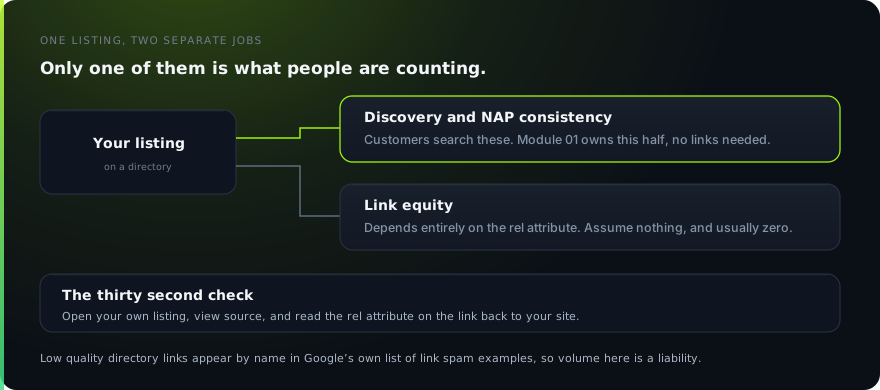
The first job is discovery and consistency. Customers genuinely search the major cannabis directories, and the name, address and phone on those listings feed the consistency work covered in module 01. That value is real and it does not depend on links at all.
The second job is link equity, and here you should assume nothing and check. Open your own listing on any directory, view the page source, and look at the rel attribute on the outbound link to your site. That takes about thirty seconds and settles it for that platform.
Do the check yourself rather than trusting an article, this one included. Platforms change these attributes without announcing it, and a claim about what a specific directory does today has a short shelf life.
What is not ambiguous is volume. Low quality directory links appear by name in Google’s own list of link spam examples, which means a strategy built on getting into two hundred of them is not neutral. It is the thing being described.
The offer to submit a business to hundreds of directories for a flat fee is the automated link creation example with a friendlier landing page. If somebody is selling that as cannabis SEO, it tells you what the rest of the engagement will look like.
The correct posture takes ten minutes to state and holds indefinitely. Be listed on the ones your customers actually use. Be accurate on every one you are listed on. Stop counting them as links and stop paying anyone to add more.
The network the business already has
This is the section that returns something in the first month, and it is the one that gets skipped, because it does not feel like SEO. It feels like admin.
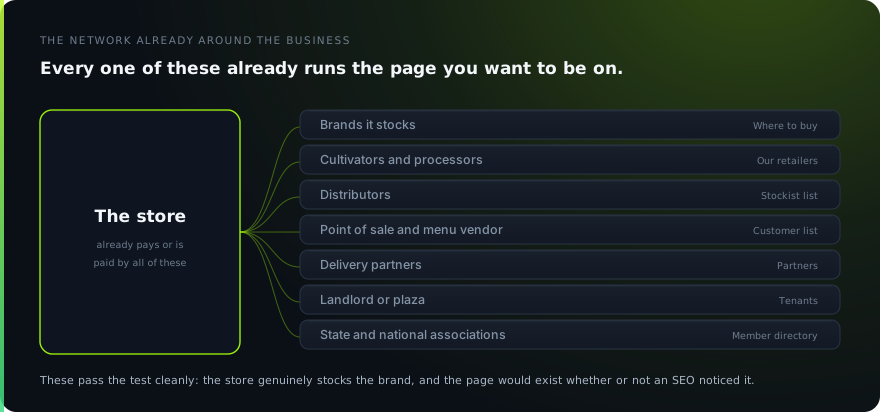
A licensed dispensary is already tied to a dozen other businesses. The brands on its shelves. The cultivators and processors behind those brands. Distributors. The point of sale and menu vendor. Delivery partners. The landlord or the plaza. Local business organisations. State and national trade associations.
Most of them already run exactly the page you want to be on. Brands have a “where to buy” or a stockist list. Vendors have a customer or partner page. Associations have a member directory. The National Cannabis Industry Association runs both a member directory and a directory of allied state associations.
These links pass the test from section three cleanly. The retailer genuinely stocks the brand. The page exists to tell customers where to buy. It would exist whether or not an SEO ever noticed it. Nothing is being manufactured.
The ask is two lines to a rep the business already speaks to every week, and it usually goes through the buyer rather than through marketing. That is why it stalls: it needs somebody inside the company to send eight emails, and the SEO cannot send them.
Run it as an inventory rather than a campaign. List every business the dispensary pays or is paid by, check whether each has a page listing its partners, note whether the store is on it, and send one email per missing entry. Half an hour to build, a week to send.
Two cautions. A “where to buy” page listing four hundred retailers with a link each is close to the template link pattern Google names. Worth having for customers, not worth building a strategy on.
And check the page is not blocked from crawling before you chase a place on it, which happens more often than you would expect.
Being a source, when your industry makes that harder
Journalists covering this industry need operators. Not agencies, not consultants, not brands with a press office. Somebody who has actually run a licensed store through a rule change and can say what happened on the floor.
What an operator has that a writer needs is specific and undramatic. What a licence application actually involved. What a packaging rule change did to shelf space. How pricing moved when three more stores opened in the same county. None of that is available anywhere else.
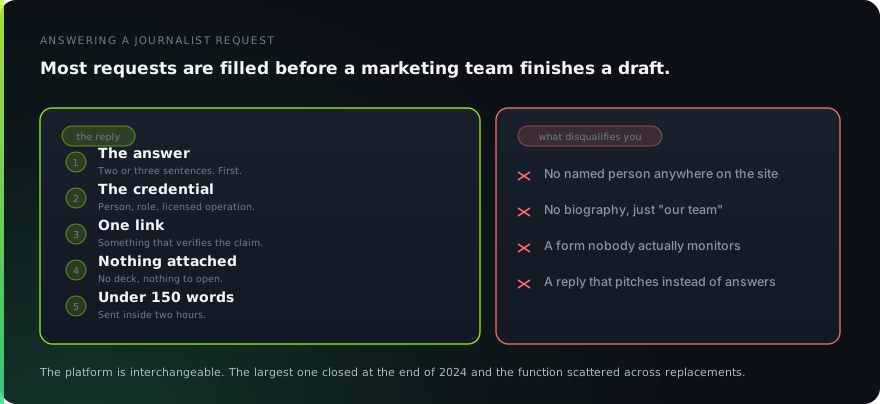
On the platform question, be careful what you build a process around. The largest journalist request service in this space shut down at the end of 2024 and the function has since scattered across several competing replacements, none of them clearly dominant.
So treat the platform as interchangeable and invest in the part that does not move. Be findable, be verifiable, and be reachable. A writer on a deadline needs to confirm in one minute that you are a real person at a real licensed operation.
That means a named person with a history somebody can check rather than a page that says “our team”, and a page that reaches a person directly rather than a form that lands in an inbox nobody opens. Both are cheap to fix and both disqualify you silently when they are missing.
What a reply that actually gets used looks like
The reply itself has a shape. Answer the question in the first two sentences. One line of credential naming the person, the role and the operation. One link. No attachment, no deck, nothing that has to be opened. Under a hundred and fifty words, sent inside two hours.
Be honest with whoever is funding this about the hit rate. Most sends return nothing at all, and that is the normal outcome rather than a sign the approach is failing. It is worth running because the links that do land are the only ones on this list a competitor cannot buy or copy.
The linkable asset, and why most content marketing produces none
Most dispensary blog posts are written to rank. That is a legitimate job and the earlier modules cover how to do it. It is also almost entirely unrelated to whether anybody will ever link to the result.
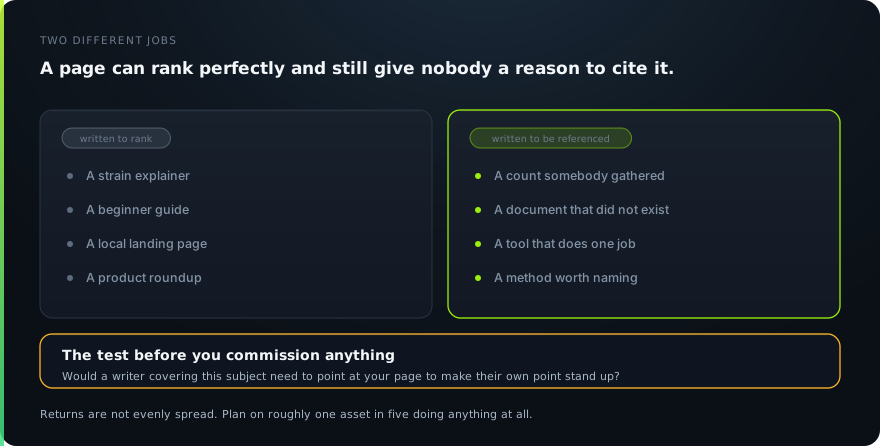
A post that answers a question completely leaves a writer nothing to do with it. They read it, they learn the thing, they write their own sentence. There is no reason to send their reader anywhere.
A page that contains something a writer cannot restate is different. A count somebody had to gather. A document that did not exist until you compiled it. A tool that does one job. A method specific enough that naming it is easier than explaining it.
The test before you commission anything: would a writer covering this subject need to point at your page to make their own point stand up? If the honest answer is no, you are building a ranking page, which is fine, as long as nobody is expecting links from it.
The worked example is this site. There are ten of them here, with no signup and no email wall on any, each doing one narrow job that came out of a real account. Nobody has to trade an address to use one, which is the entire reason a writer will link to it rather than describe it.
The same logic runs through the notes published here from live accounts. A post that reports what actually happened on a specific class of problem gives somebody a thing to cite. A post that summarises best practice does not, however well it is written.
Module 05 covers producing this kind of work at a rate you can hold without the quality collapsing, which is the real constraint. Module 03 covers the intake that supplies the raw material. Neither of them helps if what you commission was never citable in the first place.
And the part that gets left out of the pitch: the returns are not evenly spread. Most assets earn nothing. Plan on roughly one in five doing anything at all, and budget so that the four failures do not end the programme.
Unlinked mentions, the cheapest link you will ever get
Any dispensary that has been open more than a year is already named on pages that do not link to it. Local news covering an opening. A roundup of stores in the county. A brand announcing where its line is stocked. An event listing. A forum thread.
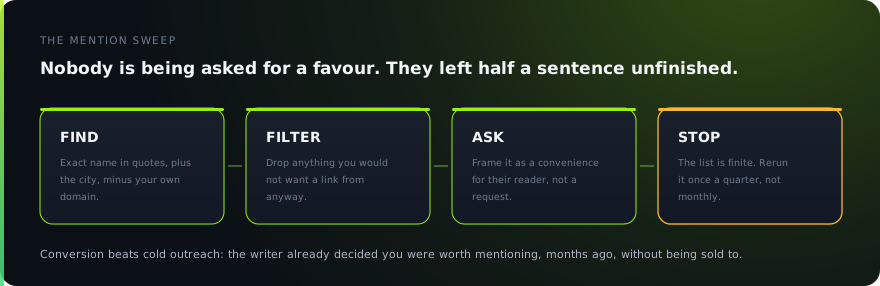
Finding them does not need a subscription for a single store. Search the exact business name in quotation marks, add the city, and exclude your own domain. Work through what comes back. For a chain it is worth doing properly with a tool, store by store.
Then filter, and filter honestly. If the page is a scraped aggregator or a directory nobody reads, a link from it is not worth an email. The rule is simple: if you would not want the link, do not ask for it.
The email works because of how it is framed. You are not asking somebody to add something. You are pointing out that a reader who wanted the store’s hours or menu after reading their piece currently has to go and search for it.
Conversion on that is far better than cold outreach, because the writer already decided you were worth mentioning. The decision that outreach normally has to win has already been made, months ago, by somebody who is not being sold to now.
It is also finite, which people forget. You will exhaust the list in an afternoon and it refills slowly. Run it once, then once a quarter, and do not let anybody build a monthly retainer line item out of it.
The paid link market, and why it is aimed at you specifically
Everything above is slow. That difficulty is exactly why an industry exists to sell you the shortcut, and why a dispensary owner’s inbox carries more link offers than a dentist’s does.
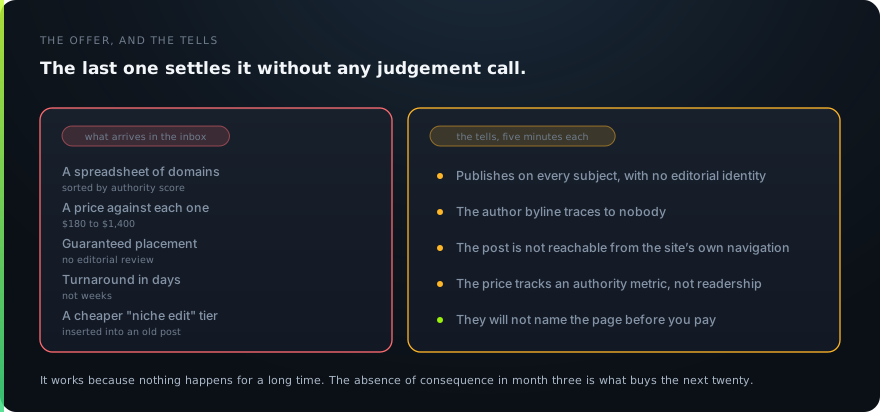
The offer is always recognisable. A spreadsheet of domains with prices against them, sorted by a third party authority score. Guaranteed placement. A turnaround in days. Often an option to insert a link into an existing article, sold as a cheaper tier.
What that is, in Google’s own words, is exchanging money for links, which sits at the top of the list of link spam examples. There is no interpretation under which it is something else, and vendors do not usually argue otherwise. They argue about the odds of being caught.
The tells are consistent enough to check in five minutes. The site covers every subject with no editorial identity. The author byline traces to nobody. The article is not reachable from the site’s own navigation or archives. The price tracks an authority metric rather than readership.
And the one that decides it without any judgement call: ask which page the link will sit on, before paying. A publisher with real editorial standards can answer that. A vendor selling links usually cannot, because the page does not exist yet.
The reason this trap works is that nothing happens for a long time. Rankings sometimes move. No warning arrives. The absence of consequence in month three reads as evidence it was fine, and that is precisely when the next twenty get bought.
The position taken on this site is not a moral one. The case studies note that no links were bought on any engagement, and that is a liability decision rather than a principle.
You cannot un-buy a link. Removal depends on a vendor who has already been paid. And the consequence lands on the client’s domain rather than on the agency that recommended it.
There is also a plain commercial version of the argument. If the links can be bought, your competitor can buy the same ones next quarter, from the same list, at the same price. Nothing you can purchase off a spreadsheet is a durable advantage.
What a bad link actually costs, and how you would know
Here is the part that makes this subject genuinely confusing, and it is worth stating plainly rather than skipping. Most bad links cost nothing at all. They are ignored, and the site carries on exactly as before.
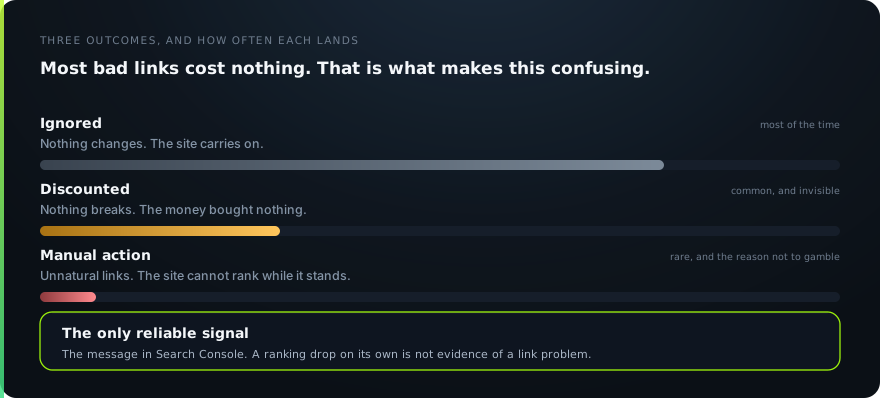
The second outcome is that the links are discounted rather than punished. Nothing breaks, and the money bought nothing. That is the common case with purchased placements and it is invisible, which is why the practice survives.
The third outcome is a manual action for unnatural links. It is rare compared to the other two, and it is the reason none of this is worth gambling on, because it removes the site’s ability to rank while it is in force.
How you would know is narrow, and this is where people go wrong. The message in Search Console is the signal. There is no other reliable one. A ranking drop by itself is not evidence of a link problem, and treating it as evidence sends teams cleaning a profile that was never the cause.
If that message does arrive, the process is the one in module 02 rather than anything in this module, starting with what the first day after a manual action actually looks like. The cause is different and the recovery path is the same shape.
On disavow, the honest position. The tool exists for the case where you know links were built for you, you have tried to get them removed, and you cannot. It is not a maintenance routine, and running it speculatively against links you did not build is the more common mistake.
Three checks on a site you have inherited
Inheriting a site is the real version of this problem, because you did not make the decision and you still own the consequence. Three things to check on day one, before you promise anybody anything.
- A jump in referring domains with no coverage behind it. Sixty new domains in a month, and nothing happened at the business that month. That pattern has one usual explanation.
- Repeated commercial anchor text. Naturally earned links mostly use the business name or a bare URL. A cluster of links all reading like a keyword was assembled, not earned.
- Sites that sell placements. Take a sample of twenty referring domains and check whether any of them has a page offering to publish sponsored posts. It usually takes fifteen minutes to know what you inherited.
Ninety days, one store, no link budget
Everything above, arranged so that something arrives early enough to keep the programme alive. The ordering is deliberate: fastest first, not most valuable first.
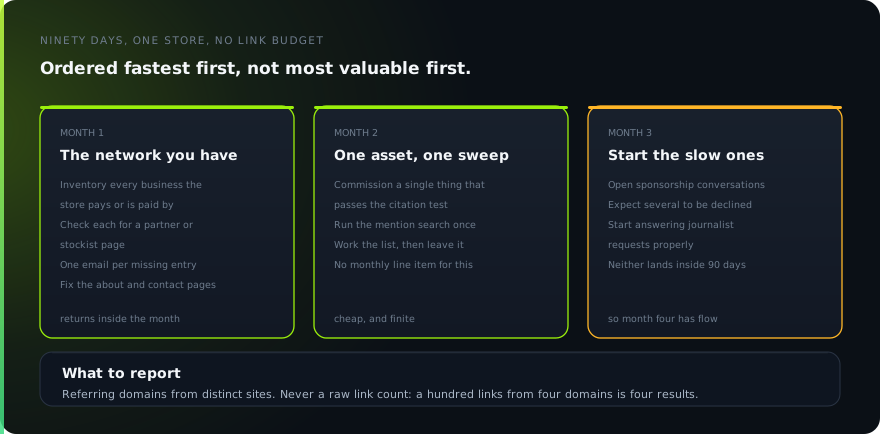
Month one is the existing network and nothing else. Build the inventory of every business the store pays or is paid by. Check each for a partner, stockist or member page. Send one email per missing entry. Fix the about and contact pages while you wait.
Month two is one asset and one sweep. Commission a single thing that passes the citation test in section nine rather than four things that do not. Run the unlinked mention search once, work the list, then leave it alone until the quarter turns.
Month three starts the slow channels, which is the point at which most programmes quietly stop. Open sponsorship conversations knowing several will be declined for reasons that have nothing to do with you. Start answering journalist requests. Neither is expected to land inside the ninety days.
Report referring domains from distinct sites, not link count. A hundred links from four domains is four results reported as a hundred, and whoever is paying for this will eventually work that out and trust nothing else in the report.
Say the honest thing at the start rather than in month four. This is the slowest work in the entire programme and the hardest to attribute. It compounds, it does not spike, and anybody promising a number by a date has told you which of the two approaches they use.
That is the set so far, and every part of it happens on ground you control: the profile, the pages, the copy, the code.
And now the one that decides which of two equally good stores gets the search, which is also the only one that cannot be done without leaving the desk.
Module 08 is where that stops being one programme. Everything above assumes one customer with one buying process. A dual licence store has two, and the second one searches nothing like the first.
If you would rather have this run properly alongside the rest of it, what an engagement covers and what it costs is set out in full, and the free audit will tell you whether prominence is actually your constraint before you spend a month on it.
Check your own site
Run the free check to see how your menu, age gate, and location pages appear to a search engine.