
Category Page
Someone ready to buy wants the whole range and a way to narrow it down. An article makes them click twice before they can shop.
greenharbor.example/menu/pre-rolls/A dispensary site can load fast, pass every technical check and still rank for almost nothing. Usually the pages are the problem: a Flower page with a heading and a grid, two posts chasing the same search, product copy pasted from the brand. Dispensary on-page SEO decides what each page should rank for, then rewrites it so it can, in words a regulator would sign off on.
On-page SEO for a dispensary is mostly this, done page by page. Skip the first job and the page ranks for the wrong thing. Skip the last and people land, read and leave.
Each page gets one main search to own, chosen for what the person wants to do: buy, learn, or find the store. Two pages aiming at the same search split the result between them.
The title, the heading and the opening lines say plainly what the page offers. Then the page gives what someone needs to choose: range, types, how to pick, what people usually ask. That same clarity is what AI assistants quote.
Guides link to the category that sells what they explain. Categories link to the guides that help people choose. Google follows the same links and learns which page matters for what.
Most on-page problems start with the wrong page chasing a search. Pick one below to see the page type that should win it, and why.
Someone ready to buy wants the whole range and a way to narrow it down. An article makes them click twice before they can shop.
greenharbor.example/menu/pre-rolls/A question, not a purchase. The guide answers it properly, then links to the category where the product actually is.
greenharbor.example/learn/live-resin/A named product is the one search the product page itself should win, provided your menu puts that page on your own domain.
greenharbor.example/menu/flower/blue-dream/Branded and local. The store page and the Business Profile answer it together, so the hours on both have to match.
greenharbor.example/stores/eastside/One page that is updated, instead of a new post every week that competes with the last one. Check what your state allows before advertising discounts.
greenharbor.example/deals/Mostly decided on the map. A good store page supports it, but the profile does the ranking, which makes it local SEO rather than on-page work.
How the map side is handledExample searches for a fictional store in a fictional town
Each of these can sit on a site for years without anyone noticing, because nothing looks broken. The pages load. They just never rank for the searches that matter.
An edibles category and an edibles blog post, both aimed at "edibles" plus the town. Google alternates between them and neither holds a position. The Cannibalization Mapper shows where yours overlap.
A strain description that promises better sleep or less pain. It might even rank, and it is also the line a regulator quotes back to you. The Compliance Checker flags that wording.
The pages that should rank for "flower" or "vapes" in your town carry one word of text and a wall of products. Google has nothing to rank them on.
The same three sentences appear on every dispensary that stocks the product. Google picks one of those pages to show, and it is rarely yours.
A good article about concentrates with no link to the concentrates page. Readers stop there, and so does the value the article earned.
National education terms owned by huge publishers. A local store rarely wins them, and the posts pull effort away from pages that could.
This is the rebuilt page. Drag the handle to the right to uncover what was there before. Same address, same products. The difference is what Google and a customer can read.
Before: Generic heading, No intro, No links out. After: Heading with the search term, Intro that answers the search, Links to guides, Questions customers ask.
Six areas, worked in the order the keyword map sets. Pages closest to a sale usually go first, because that is where a better ranking turns into customers soonest.
The map comes first and nothing is rewritten until you have agreed it, because every page decision depends on it.
Every page listed with the search it should own, its intent, and where two pages compete. You approve it before anything changes.
The six pages closest to a sale and furthest from where they should rank. Usually categories and the store pages.
Titles, headings, intros, buying help and links, each checked for compliance and sent to you before it goes live.
Rankings and clicks for each rewritten page compared with the weeks before, on complete weeks only.
Screenshots from case studies where keyword research and page work were a large part of the job. Names are blurred. Every figure is as Google reports it. See every screenshot
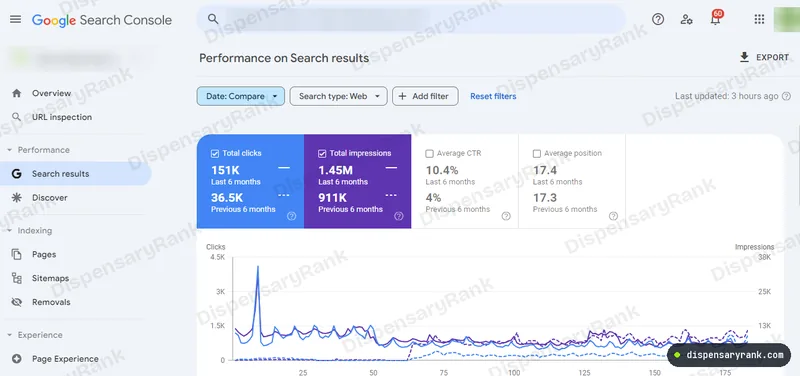 151K
clicks in six months, against 36.5K the six before
Michigan Dispensary Chain
Read the case
151K
clicks in six months, against 36.5K the six before
Michigan Dispensary Chain
Read the case
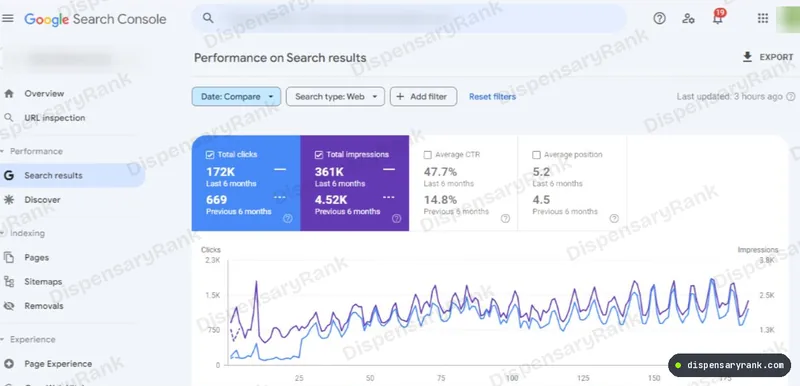 172K
clicks in six months, against 669 the six before
Michigan Dispensary
Read the case
172K
clicks in six months, against 669 the six before
Michigan Dispensary
Read the case
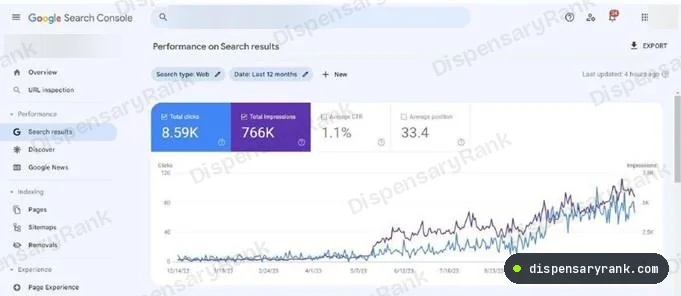 766K
impressions in twelve months for a catalogue business
Hydroponics Supplier
Read the case
766K
impressions in twelve months for a catalogue business
Hydroponics Supplier
Read the case
Start with a sprint that maps the whole site and rewrites the pages that matter most. Keep going with a monthly programme if you want the rest of the site done, a few pages at a time.
Cannabis on-page SEO fixes what the pages say and what they aim at. The full package also fixes the site underneath and the map. If Google cannot read the pages yet, start there instead.
| What is included | On-page SEO only | Full package |
|---|---|---|
| Keyword map for the whole site | ||
| Pages rewritten | Six, then four a month | As the plan needs |
| Compliance check on copy | ||
| Internal linking | ||
| Technical and rendering audit | ||
| Business Profile and local work | ||
| Starts at | $900 once | $600 a month |
The free review maps your main pages against the searches they should own, flags the ones competing with each other, and points out copy that could cause trouble. You get it in writing, whether or not we work together.
Get Your Free Page Review Or see every service and the pricing